
Think of Polyurethane (PU) and Polyisocyanurate (PIR) panels as two brothers in the construction world. On the surface, they look identical, they originate from the same chemical family, and they both excel at their main job: keeping cold rooms cold. However, there is a crucial family trait that sets them apart: under extreme heat, PU melts, while PIR chars and holds its ground.
Let's begin with what they have in common. Both are closed-cell rigid foams boasting a thermal conductivity of around 0.018 to 0.024 W/m·K—making them roughly 40% more thermally efficient than standard EPS. Both effectively resist moisture and can easily handle freezing temperatures down to -40°C. If you are operating a standard chiller at +2°C, you won't notice a difference in daily performance. If insulation efficiency were the only deciding factor, PU would easily win based on its lower price tag.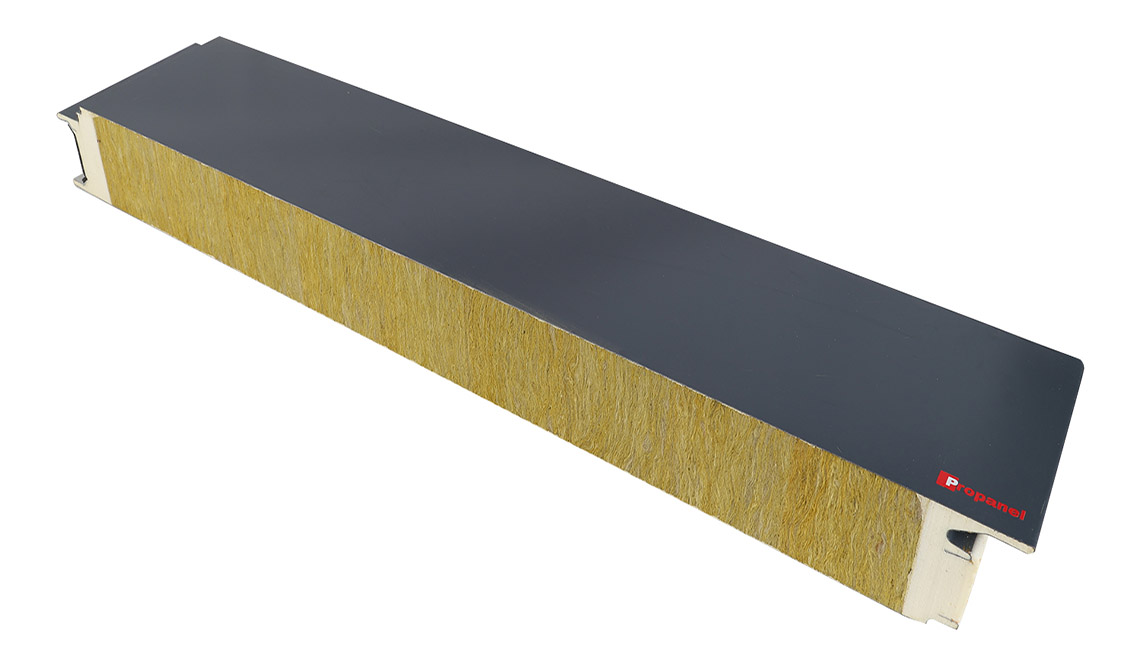
The real divide between the two comes down to fire performance. PU is a thermoplastic foam. Under sustained heat, it softens, melts, and releases dense smoke. Standard PU panels generally achieve a B2 fire rating; while this passes basic local codes in many regions, it falls short of stricter European and Middle Eastern safety standards.
PIR, on the other hand, is a thermosetting polymer. When exposed to a flame, a chemical reaction forces it to form a dense, rigid char layer. This layer actively shields the unburnt foam underneath and drastically slows the spread of the fire. Genuine PIR achieves a strict B1 rating with an oxygen index reliably above 35%. In laboratory testing, PIR's peak heat release rate is approximately 50% lower than PU's, and its char yield jumps from a mere 3% to over 22%. This isn't just marketing—it's measured, proven structural performance.
There are a few other differences worth noting. PIR can handle continuous ambient temperatures up to 120°C, whereas standard PU begins to structurally degrade above 100°C. PIR also delivers higher compressive strength. With a density of around 45–55 kg/m³ compared to PU's 35–45 kg/m³, PIR is significantly more dimensionally stable in massive facilities that experience drastic temperature swings.

Derechos de autor
@ 2026 CHENGDU PROPANEL TECH CO., LTD. Reservados todos los derechos
.  RED SOPORTADA
Hi! Click one of our members below to chat on